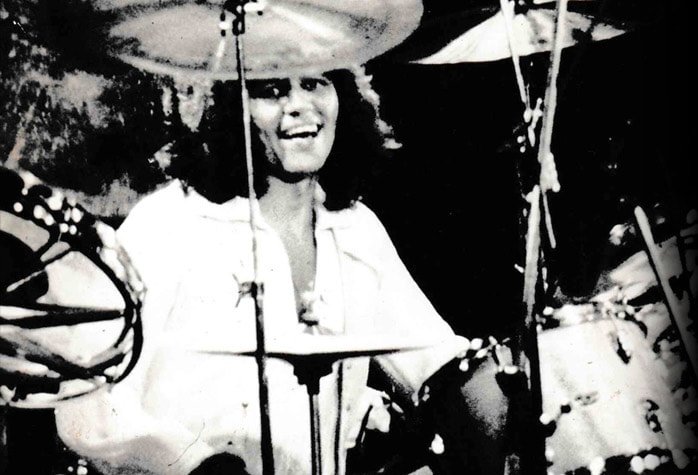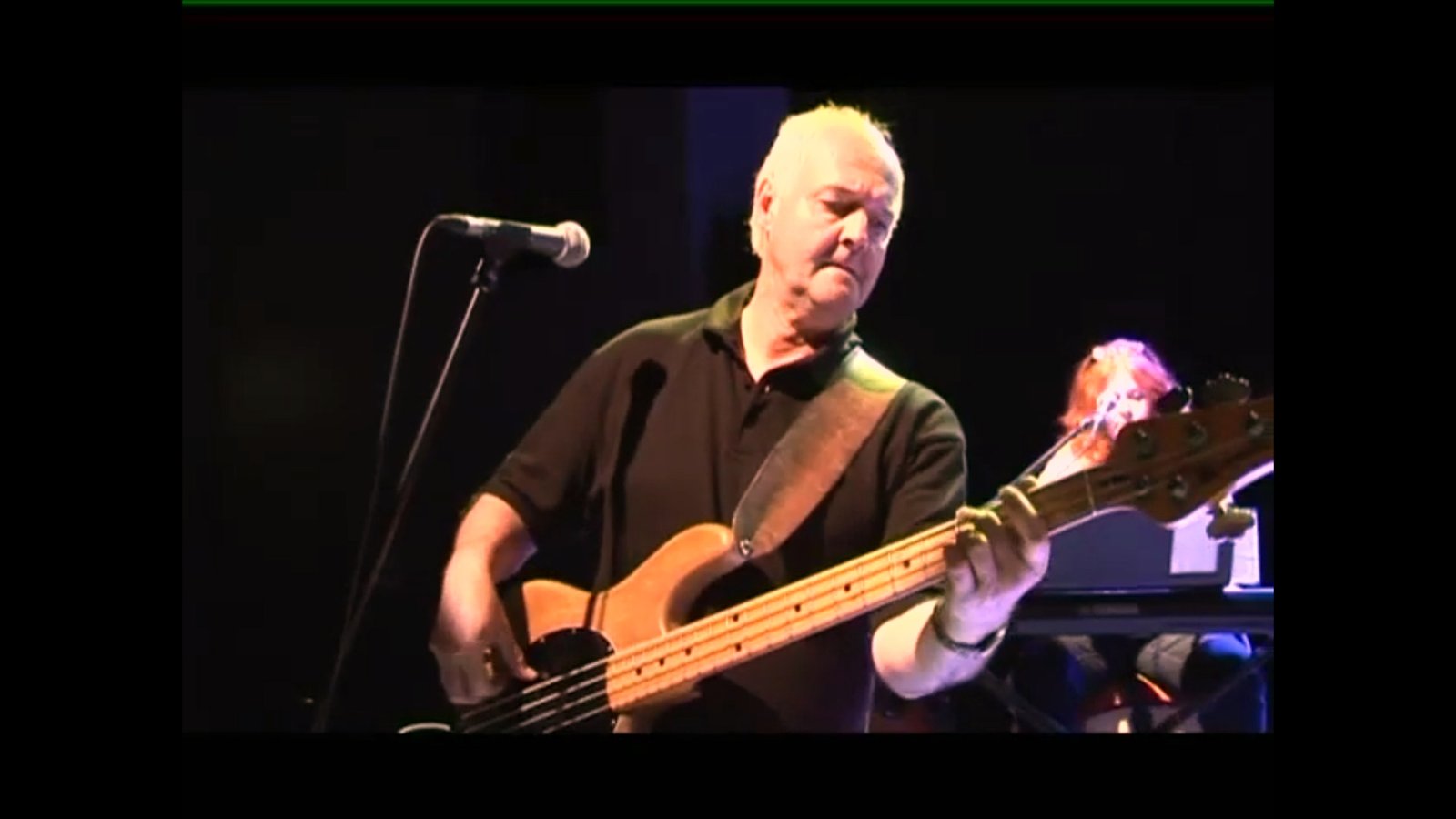
Few musicians can claim to have witnessed the evolution of popular music from quite such a remarkable vantage point as Bobby Elliott.
As drummer with The Hollies, Elliott helped soundtrack the 1960s and beyond, contributing to one of Britain’s most successful bands while rubbing shoulders with everyone from Elton John and Jimi Hendrix to Joni Mitchell, Keith Moon and Jimmy Page. Yet throughout the conversation, what stands out most is not the scale of his achievements, but the grounded perspective with which he views them.
A Lancashire Beginning
Long before Abbey Road, American tours and chart success, Elliott was a schoolboy growing up between Burnley, Nelson and Roughlee.
His musical education began through a combination of curiosity and ingenuity. Unable to access much American jazz through conventional channels, he tuned into the Voice of America on shortwave radio and built a makeshift drum kit from biscuit tins supplied by his family’s shop. It was there, listening to broadcasts from across the Atlantic, that his fascination with rhythm first took hold.
At Nelson Grammar School, Elliott and friends immersed themselves in jazz, discussing Charlie Parker, Gerry Mulligan and the great American players while most of Britain was still largely disconnected from those influences. Before long, he was sitting in with local dance bands and jazz groups, learning on the job in front of live audiences.
Learning Through Jazz
Unlike many drummers who begin with structured lessons, Elliott’s development came through improvisation and real-world experience.
Playing alongside older musicians in local clubs forced him to react quickly, listen closely and adapt on the fly. Those early experiences would shape his style for decades to come. The spontaneity and musical awareness required by jazz never left him, even after rock and roll transformed the musical landscape.
It was also during this period that he first encountered a young guitarist named Tony Hicks, another Lancashire teenager who would eventually become a key figure in The Hollies.
The Road to The Hollies
Elliott’s first steps into professional music came via Shane Fenton and the Fentones.
At the time, he was still serving as an apprentice engineer in the coal industry. When the opportunity arrived, he handed in his notice and informed his boss that he was leaving to become a drummer. The response was surprisingly supportive: his employer agreed to keep his position open for two weeks, just in case things didn’t work out. He never needed to return.
Soon afterwards, circumstances aligned for Elliott to join The Hollies, beginning a partnership that would define the rest of his career.
Abbey Road and Making Records
The Hollies entered Abbey Road during one of the most exciting periods in British music history.
Recording sessions moved quickly. Producer Ron Richards preferred momentum over perfection, often pushing the band from one project straight into the next. Elliott recalls recording classics such as Stay at a remarkable pace, capturing performances before anyone had time to overthink them.
One of the conversation’s most charming stories concerns Elliott’s bass drum sound on Stay. Dissatisfied with the tone, he persuaded engineer Peter Bown to experiment with additional microphone placement. The solution involved draping his grandmother’s curtain over the drumhead to control resonance — a practical fix that became part of the final recording.
It’s a reminder that many legendary recordings were built from ingenuity rather than technology.
The British Invasion
When The Hollies first travelled to America in 1965, they arrived during the height of the British Invasion.
The experience was transformative. New York, Los Angeles and the wider American music scene offered a world far removed from Lancashire dance halls. Elliott found himself attending jazz clubs where he could sit just feet away from heroes such as Charles Mingus and Gene Krupa.
He also witnessed the strange reversal taking place in American music at the time. While British bands were being celebrated, many of the American jazz legends who had inspired them were performing to relatively small audiences.
For a lifelong jazz enthusiast, it was both thrilling and slightly surreal.
Encounters with Legends
Throughout the interview, Elliott casually recalls encounters that would seem almost unbelievable if they weren’t delivered with such matter-of-fact honesty.
There are stories of seeing Jimi Hendrix playing guitar with Little Richard, sitting in clubs with Keith Moon, watching Jimmy Page discuss the formation of Led Zeppelin, and meeting Joni Mitchell shortly after she had written Both Sides Now.
Yet Elliott never presents these moments as brushes with celebrity. Instead, they emerge as snapshots of a rapidly changing musical world, observed by someone who happened to be standing in the middle of it.
Why Home Always Mattered
One of the most revealing themes of the conversation is Elliott’s attachment to Lancashire.
While many musicians embraced the glamour and excess of the era, Elliott found comfort in returning home whenever schedules allowed. Between tours, television appearances and recording sessions, he would often head back to Roughlee, Nelson and the surrounding area, reconnecting with familiar places and familiar people.
The contrast was striking: one week he might be attending parties in Los Angeles with future rock legends, and the next he would be enjoying a quiet pint in a local pub a few miles from where he grew up.
Rather than seeing those worlds as contradictory, Elliott seems to have viewed them as complementary.
The Hollies Beyond Graham Nash
The departure of Graham Nash could easily have marked the end of the band’s success.
Instead, The Hollies entered another productive period, producing enduring hits including He Ain’t Heavy, He’s My Brother, Long Cool Woman in a Black Dress and The Air That I Breathe. Elliott reflects on the transition with characteristic honesty, acknowledging Nash’s importance while recognising that the band continued to evolve and flourish after his departure.
Looking Back
Today, Elliott can look back on a career that includes countless hit records, international tours, an Ivor Novello Award and induction into the American Rock & Roll Hall of Fame. Yet his reflections rarely focus on accolades.
Instead, he talks about musicians, friendships, clubs, songs and moments.
The conversation leaves the impression of a man who never became overly impressed by his own success. He remains fascinated by music itself — the craft, the community and the people who make it happen.
For a drummer who started out playing on biscuit tins above a family shop in Lancashire, it has been an extraordinary journey. Yet Bobby Elliott tells it with the same warmth, humour and humility that have clearly accompanied him every step of the way.