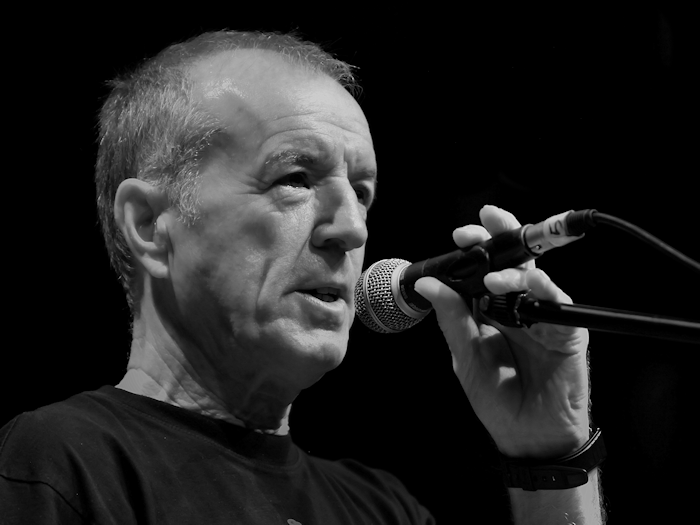
Bev Bevan: From Birmingham Dance Halls to Rock History

Bev Bevan has spent more than six decades behind the drum kit, contributing to some of the most iconic records and tours in rock history. From the birth of The Move and the rise of ELO to life on the road with Black Sabbath, he shares the stories, friendships and moments that defined an extraordinary…

Bev Bevan: From Birmingham Dance Halls to Rock History

Few musicians can claim to have helped shape multiple chapters of British rock history. Fewer still can say they’ve played with The Move, Electric Light Orchestra and Black Sabbath, all while maintaining the same enthusiasm for music that first drew them to a drum kit as a teenager in Birmingham.

In this conversation, Bev Bevan joins The Liner Notes Club alongside Quill founder Joy Strachan-Brain to reflect on a remarkable career spanning more than six decades, from the birth of the Birmingham music scene to arena tours, chart success and the enduring appeal of live performance.  

A Drummer Before He Knew Why

Bev’s musical journey began with a curious coincidence.

Despite losing his father at the age of ten, he found himself naturally drawn to the drums when forming a school band in the early 1960s. Only later did his mother reveal that his late father had been a professional drummer during the war years, leading a group called The Bev Bevan Dance Trio — the source of both his musical inheritance and his name.  

Entirely self-taught, Bev learned by playing along to the records that defined early rock and roll: Elvis Presley, Chuck Berry, Gene Vincent, Eddie Cochran and Jerry Lee Lewis. It was an education shared by many musicians of his generation, but one that quickly set him on a path towards professional music.  

The Birmingham Beat Years

The Birmingham scene of the early sixties was thriving, and it wasn’t long before Bev found himself playing alongside future stars.

After meeting Brian Hines — later known to the world as Denny Laine — the pair formed Denny Laine and the Diplomats, becoming one of the city’s busiest young bands. Their rise was swift, opening for both The Beatles and The Rolling Stones before Laine departed to form The Moody Blues.  

From there came the opportunity that would change everything.

Building The Move

The Move emerged from an ambitious idea: create a Birmingham “supergroup” by assembling the region’s strongest musicians into a single band.

The result was one of the most exciting live acts of the late sixties. Bev recalls a group capable of complex harmonies, tight arrangements and an intensity that quickly attracted attention from London’s record industry. Within months of securing a residency at the Marquee Club, the band found themselves with multiple record labels competing for their signature and a major hit with Night of Fear.  

Their rise brought them onto bills that today seem almost unimaginable, sharing stages with Jimi Hendrix, Pink Floyd and Amen Corner on nationwide tours. Looking back, Bev remains impressed by just how strong that original Move line-up really was.  

The Birth of ELO

As The Move evolved and personnel changed, Roy Wood began developing a new concept that would eventually become Electric Light Orchestra.

Jeff Lynne’s arrival proved pivotal. Initially reluctant to join The Move, Lynne’s ambition was to build something entirely new. The result was a period in which Bev found himself charting simultaneously with both bands — California Man by The Move and 10538 Overture by ELO appearing at the same time. A feat he believes remains unique.  

Early ELO was ambitious but unwieldy. As the line-up evolved and expanded to include orchestral arrangements, the band’s distinctive identity emerged. Albums such as Eldorado helped establish ELO in America before Britain fully embraced them, laying the foundations for one of the decade’s biggest success stories.  

Spaceships, Stadiums and Success

For Bev, the peak of ELO came in 1978 during the legendary Out of the Blue tour.

By then, the band had grown from supporting acts on American tours to headlining arenas and stadiums in their own right. The famous spaceship stage set became one of the defining visual spectacles of the era, matching music that was increasingly designed for larger and larger audiences.  

While ELO would continue to enjoy success, Bev still regards that period as the band’s pinnacle — a moment when everything came together artistically, commercially and culturally.  

Enter Black Sabbath

As if The Move and ELO weren’t enough, the 1980s brought another chapter.

When Black Sabbath needed a drummer for the Born Again tour, longtime friend Tony Iommi turned to Bev. What followed were several years touring with one of heavy metal’s most influential bands alongside Tony Iommi, Geezer Butler and Deep Purple’s Ian Gillan.  

The friendship remains strong today. In fact, Tony Iommi served as Bev’s best man when he married Joy just a few years ago.  

The conversation also touches on Ozzy Osbourne’s final appearance at Villa Park, which Bev describes as a deeply emotional celebration of Black Sabbath’s legacy and influence on generations of musicians.  

Why Birmingham Produced So Many Great Bands

One of the most fascinating parts of the discussion explores why industrial cities such as Birmingham, Liverpool and Manchester produced such extraordinary musical talent.

For Bev, part of the answer lies in the desire to escape difficult working conditions. Factory jobs, mines and industrial labour offered limited opportunities, while music represented creativity, freedom and a chance at a different life.  

It’s a theme that echoes throughout many of the conversations featured on The Liner Notes Club — from The Hollies’ Bobby Elliott to countless musicians who emerged from Britain’s working-class communities during the post-war years.  

Quill: Still Going Strong

The second half of the conversation turns to Quill, the long-running band fronted by Joy Strachan-Brain.

Formed in 1972, Quill has survived decades of changing musical fashions, evolving line-ups and industry shifts. While the group eventually moved away from exclusively performing original material, they developed a reputation for bringing their own distinctive character to every song they perform.  

Joy reflects on the many musicians who have passed through the band’s ranks, while Bev speaks warmly of his long-standing admiration for the group — admitting he first became a fan during their Birmingham residency years long before eventually joining the line-up himself.  

Today, Quill remains a vibrant live act with a busy schedule and a strong connection to audiences across the Midlands and beyond.

A Life in Music

By the end of the conversation, one thing becomes abundantly clear.

Whether discussing early Birmingham clubs, chart-topping records, stadium tours or intimate venues such as Barnoldswick Music & Arts Centre, Bev Bevan’s enthusiasm for music remains entirely undiminished.

It’s a career that stretches from the birth of British beat music to the present day — and one that continues to add new chapters.

Not a bad run for a drummer who once volunteered for the job before he’d ever played a note.