The Animals drummer reflects on skiffle, blues, House Of The Rising Sun and surviving six decades in music.
More than sixty years after helping create one of the defining records of the twentieth century, John Steel still talks about music with the enthusiasm of a fan. Sitting down with The Liner Notes Club, the original Animals drummer reflects on discovering jazz as a teenager in Newcastle, the explosion of rock ‘n’ roll in Britain, and the remarkable chain of events that carried a group of working-class musicians from Tyneside clubs to international stardom.
What emerges isn’t just the story of a band. It’s the story of a generation. A generation that discovered American blues records, challenged expectations, and found a new identity through music. Along the way came art school skiving, all-night rhythm and blues clubs, Chuck Berry tours, House Of The Rising Sun, and eventually the surreal experience of arriving in New York to find crowds of screaming fans waiting at the airport.
Yet despite the extraordinary journey, Steel remains refreshingly grounded. By the end of our conversation, he sums up six decades in music with characteristic understatement:
“How am I still getting away with this?”
“I’ll Play Drums Then”
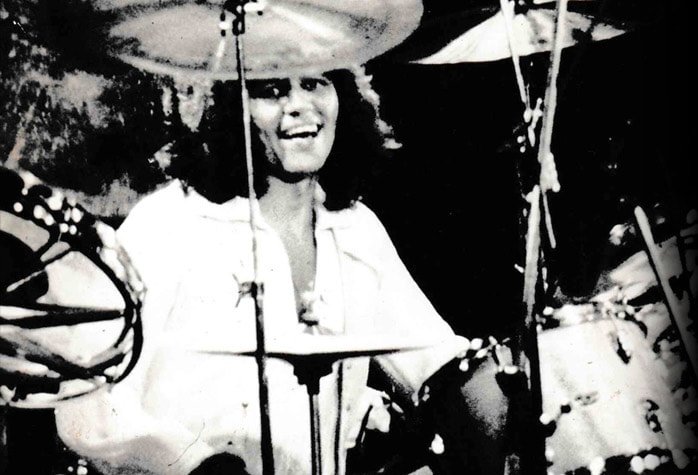
Like many musicians of his generation, John Steel’s first love wasn’t rock ‘n’ roll at all. As a teenager he became fascinated by jazz, inspired by records owned by his older brother and a growing curiosity about the music arriving from America. He took up the trumpet at fourteen and, after leaving school without qualifications, enrolled at Newcastle College of Art. Like many future members of Britain’s great 1960s bands, art school provided both a creative environment and a convenient way of avoiding what he laughingly describes as “work.” It was there that he first met Eric Burdon.
At the time, Burdon fronted a small jazz outfit called The Pagan Jazz Men. It was hardly a polished operation. One member owned a trombone he couldn’t really play, another had little more than a snare drum and hi-hat, and the repertoire consisted largely of traditional jazz standards. But Britain was changing. Rock ‘n’ roll was rapidly replacing jazz as the soundtrack of youth culture, and the band found itself evolving almost by accident. Burdon decided he wanted to sing, the drummer moved to bass, the banjo player switched to guitar, and suddenly there was a vacancy behind the drum kit.
Steel’s response was wonderfully simple.
“I’ll play drums then.”
At fifteen years old, there seemed no reason not to. Looking back now, it’s remarkable how casually one of the defining drummers of the British Invasion found his instrument. What began as a practical solution within a local band would ultimately place him at the centre of one of Britain’s most influential groups.
The Records That Changed Everything
When asked about the music that shaped him, Steel immediately returns to the records arriving from America. Some found their way into Newcastle through merchant seamen bringing home sounds unavailable anywhere else in Britain. Others arrived via black-and-white rock ‘n’ roll films that introduced British teenagers to artists such as Chuck Berry, Fats Domino, Little Richard, Eddie Cochran and Elvis Presley. To young musicians growing up in post-war Newcastle, these records felt almost otherworldly.
Two recordings stand out above all others. Elvis Presley’s Heartbreak Hotel demonstrated what rock ‘n’ roll could be. At almost exactly the same time, Lonnie Donegan’s Rock Island Line showed that ordinary people could make music themselves. Together, the two records sparked something in a generation of young listeners who suddenly realised they didn’t need formal training or expensive equipment to start a band. A cheap guitar and a handful of chords might be enough.
Steel describes the impact perfectly:
“The combination of Heartbreak Hotel and Rock Island Line made so many people think, ‘I can do that.’”
Like countless musicians of the era, he and his contemporaries soon began tracing those influences backwards. Behind Elvis they discovered Big Mama Thornton. Behind Bill Haley they found Big Joe Turner. Before long they were immersed in the music of Howlin’ Wolf, Muddy Waters, John Lee Hooker and the architects of American blues. For young people growing up in industrial cities such as Newcastle, there was something deeply relatable about the rawness and honesty of the music.
Newcastle Before Beatlemania
Long before international success arrived, Newcastle had developed one of Britain’s most vibrant rhythm and blues scenes. At its heart stood the legendary Club A Go-Go, a venue that would become instrumental in the development of The Animals. Initially divided between a jazz room and a youth-oriented pop room, the club quickly adapted to changing tastes as rhythm and blues began attracting larger audiences. Before long, The Animals had effectively become the house band, performing five nights a week and building a devoted local following.
What many people don’t realise is that the band’s early fanbase looked very different from the crowds that would later greet them in America. According to Steel, their audience was overwhelmingly male. These were dedicated blues and rhythm and blues fans who came to hear serious musicianship rather than pop stars. In Newcastle, Liverpool, Manchester, Glasgow and Sheffield, similar scenes were developing independently. Young musicians were discovering the same records and drawing inspiration from the same artists without realising that a nationwide movement was beginning to take shape.
“We were a blokes’ band,” Steel recalls.
The Beatles would soon connect those regional scenes and transform British popular culture, but before Beatlemania arrived there were countless local bands building passionate followings within their own cities. The Animals were among the strongest of them. Years of relentless live performance gave them an edge that would prove invaluable once larger opportunities began to emerge.
From Newcastle To London
The next major step came through a series of fortunate encounters and shrewd management decisions. By this point the line-up that would become The Animals was largely in place. Alan Price had joined after a chance meeting at a local gig. Chas Chandler had come across from another Newcastle band. Hilton Valentine arrived shortly before Steel returned to the group after a brief spell working outside music. Remarkably, Steel and Valentine played their first show with the band on the same night without a single rehearsal. Everyone simply knew the songs and got on with it.
Club A Go-Go brought a steady stream of visiting artists through Newcastle, including John Lee Hooker, Sonny Boy Williamson and the Graham Bond Organisation. It was Graham Bond who would play an important role in opening doors for the band. Through manager Mike Jeffery, connections were established in London, leading to an exchange of gigs with The Yardbirds and introductions to key figures on the capital’s flourishing rhythm and blues circuit. Suddenly the world seemed much bigger than Newcastle.
By early 1964 the band had relocated to London. Along the way they acquired a new name. Graham Bond suggested dropping the cumbersome Alan Price Rhythm and Blues Combo in favour of something more memorable.
The Animals were born.
House Of The Rising Sun
Few stories in popular music are as remarkable as the recording of House Of The Rising Sun. By the time The Animals entered the studio, the song had already become a standout moment in their live set. Night after night, audiences reacted differently when it began. There was an electricity in the room that the band couldn’t ignore. Chas Chandler became convinced they had stumbled upon something special.
The recording session itself could hardly have been simpler. In the middle of a tour featuring Chuck Berry, Carl Perkins and other rock ‘n’ roll legends, the band squeezed in time at a small London studio. The facilities were basic. There was no sophisticated production process, no endless experimentation and no safety net. The band set up, found a balance and played the song. Once.
“We played it one time. No overdubs. No nothing. It was just a live performance.”
When producer Mickie Most played the recording back, he immediately declared it a hit. The only concern was its length. At four minutes and thirty-five seconds, it far exceeded what radio stations typically played. Yet once the song appeared on television and began climbing the charts, those concerns disappeared. House Of The Rising Sun became a worldwide phenomenon and transformed The Animals from a successful club band into international stars almost overnight.
America And The View From The Top
Success brought experiences that seemed unimaginable only a few years earlier. After House Of The Rising Sun reached number one in America, The Animals found themselves flying to New York and stepping directly into the hysteria of the British Invasion. Waiting for them at the airport were crowds of fans, a fleet of Triumph sports cars and a carefully orchestrated publicity stunt involving glamorous models dressed with tiger tails and whiskers. The drive into Manhattan remains one of Steel’s most vivid memories.
Approaching the New York skyline, surrounded by screaming fans and police escorts, he remembers looking at his bandmates and wondering whether any of it was real. For a group of musicians from Newcastle who had grown up regarding America as a distant fantasy glimpsed through records and films, the experience was surreal. Yet it was only the beginning. Their first American engagement took place at the legendary Paramount Theatre in Times Square, a venue associated with Frank Sinatra and the great big band leaders of an earlier era.
For Steel personally, the trip offered another thrill. As a lifelong jazz fan, he found himself just blocks away from Birdland, where he spent evenings watching John Coltrane perform. It was a reminder that even amid chart success and international fame, his original love of music remained unchanged.
Still Getting Away With It
More than six decades later, The Animals’ songs continue to resonate. Steel believes the reason lies in the material itself. Tracks such as We Gotta Get Out Of This Place, Don’t Let Me Be Misunderstood and It’s My Life captured something larger than simple pop entertainment. They reflected a generation beginning to define itself independently from its parents and determined to make its own choices.
That influence continues to be recognised today. Bruce Springsteen has repeatedly cited The Animals as a major inspiration, praising the band’s class consciousness and the emotional honesty of its songs. For Steel, such admiration remains difficult to fully comprehend. Even now he speaks with the humility of someone who still feels slightly surprised to be there.
Asked why he still performs, the answer is simple. He loves the music. He loves the songs. And he still gets a buzz from walking on stage.
“I think we were a very lucky generation. We were in the right place at the right time.”
Perhaps that’s the secret. Behind the hit records, the sold-out theatres and the decades of touring is still the same teenager who picked up a trumpet in Newcastle and later volunteered to sit behind a drum kit because somebody had to. The songs have become timeless. The audience keeps returning. And John Steel still occasionally wonders how he’s managed to get away with it for so long.